Today is the day I build the thing.

I may not be sure what the thing is,

but chisel will be applied to granite.

— Darrell Bell, January 17, 2026

Chapter 1

1981

The Unix Manual

It starts with an 11-year-old boy in Atlanta and a Unix manual he had no business reading.

His father worked for Western Electric — the manufacturing arm of the Bell System. One day he brings home a Unix manual. The kind of dense technical documentation that would put most adults to sleep.

Darrell Bell read it cover to cover.

He also had a TI-99/4A with a speech synthesis module. At 11 years old, he was already making a computer speak.

Forty-four years later, he still is.

Chapter 2

1986: Sound Waves and Fourier Transforms

At 16, while most kids were learning to drive, Darrell had an internship at the Physics and Astronomy Department at Georgia State University. He was writing code on an Apple IIe, working with a system called the VELA Expander.

What the VELA did was elegant: it took sound waves and decomposed them into their component harmonics using Fast Fourier Transforms. See the invisible structure inside the sound.

A teenager, writing signal processing code on 8-bit hardware, learning that every wave has a hidden architecture.

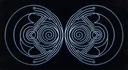
FAST FOURIER TRANSFORM — HARMONIC DECOMPOSITION

Chapter 3

1988–1993: Georgia Tech

He had a full scholarship to Morehouse. He turned it down.

Georgia Tech was the number three engineering school in the country. He wanted the hardest version of the education he could get.

He graduated in 1993 — the same year Mosaic launched and the World Wide Web went from academic curiosity to global phenomenon.


Chapter 4

Early 1990s: Building the Infrastructure

At Clark Atlanta University, he built the network infrastructure and wrote software for WCLK — the university's legendary jazz radio station. He met Ken Batie, a giant in Atlanta's music and broadcasting world.

He also got behind the microphone. Part of Jamal Ahmed's Sounds of Universal Love — soul music and drum and bass. The broadcast bug bit him and never let go.

At Emory University, he built out their satellite office network. Wherever Darrell went, he built the infrastructure that connected people to information and culture.

Clark Atlanta University WCLK 91.9 FM Emory University

Chapter 5

Late 1990s–2000s: Diamond Lounge Studios / Red Creative

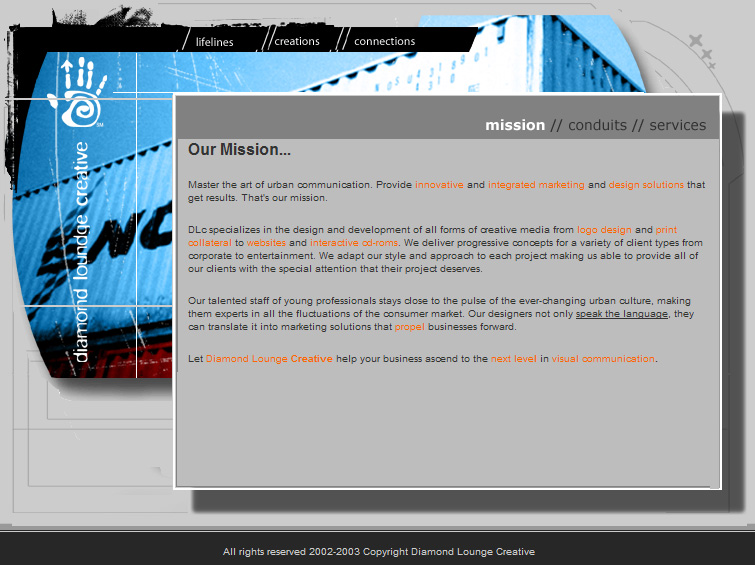
Diamond Lounge Studios was a creative agency born from Atlanta's culture. Darrell and his partners — Fahamu Pecou, Oronike Odeleye, and others — built something that operated at the intersection of art, technology, and Black culture.

Featured on the Oprah Winfrey Show. Campaigns for BMW, Nokia. Billboard wraps for Grady Hospital. Creative for the National Black Arts Festival.

This wasn't a side project. This was Atlanta culture at scale.

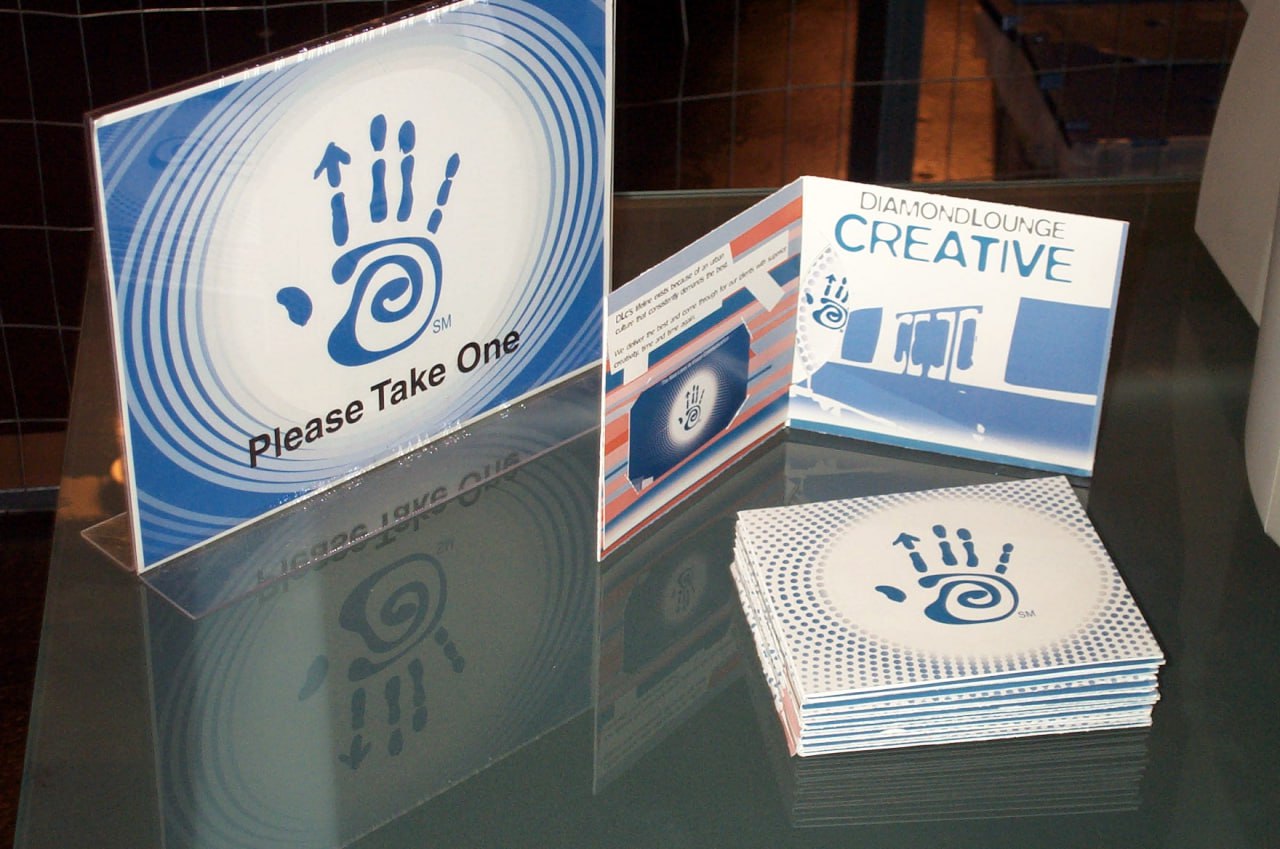
Diamond Lounge Creative site header Diamond Lounge Studios logo Diamond Lounge Creative — printed collateral and brochures
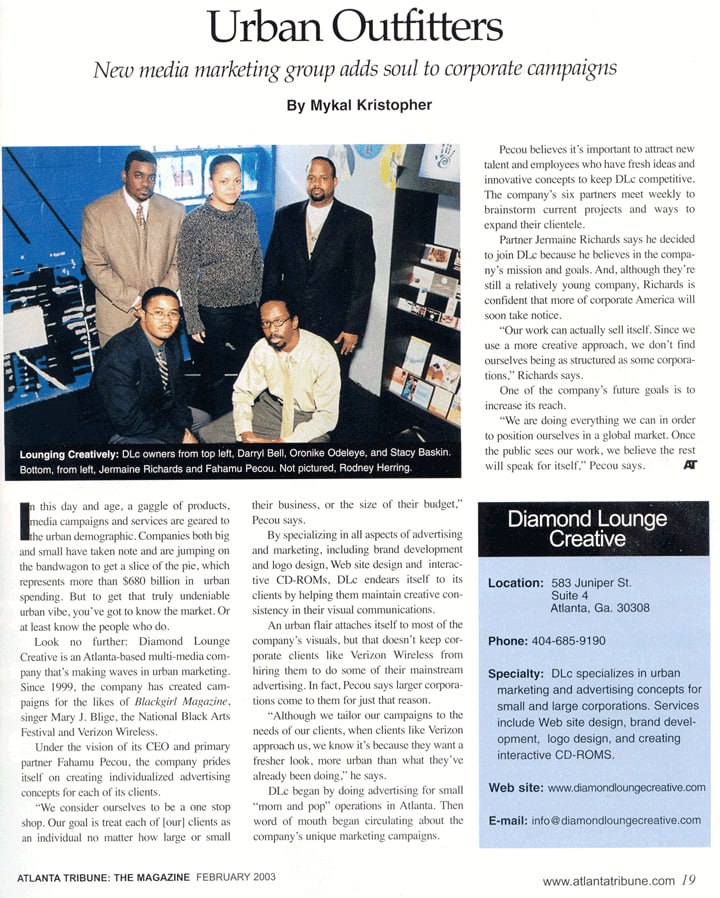
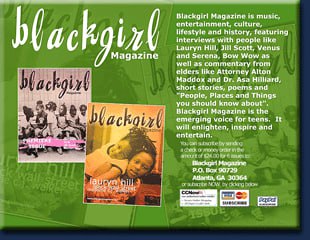
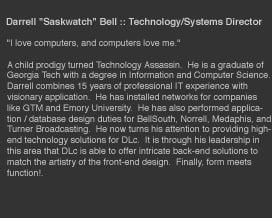
Atlanta Tribune — 'Urban Outfitters' feature on Diamond Lounge Creative, February 2003 Blackgirl Magazine — Diamond Lounge Creative Darrell 'Saskwatch' Bell — Technology/Systems Director, DLC

Chapter 6

Early 2000s: digital-djs.com

Before Spotify. Before Apple Podcasts. Before anyone was streaming music in their car.

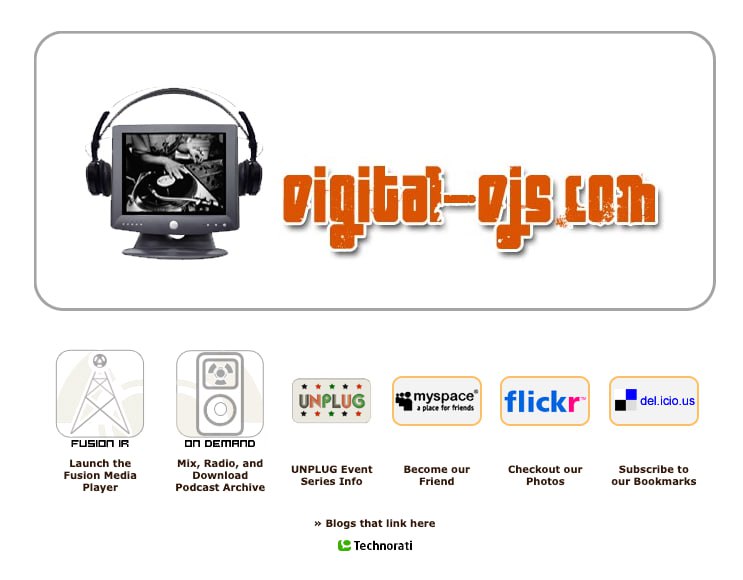
digital-djs.com ran for six years as one of the first legitimate podcast and internet radio distribution networks on earth. WMA, RealAudio, ShoutCast. Streaming shows, discussion forums, CD sales. A complete platform for music and culture, delivered over the internet.

"One of the first to provide streaming music for the morning commute, at a time when most people didn't know you could listen to audio on a computer that wasn't a CD."

digital-djs.com — Wayback Machine capture. Fusion IR, On Demand, UNPLUG, MySpace, Flickr, Technorati.

Chapter 7

2015: The Emmy

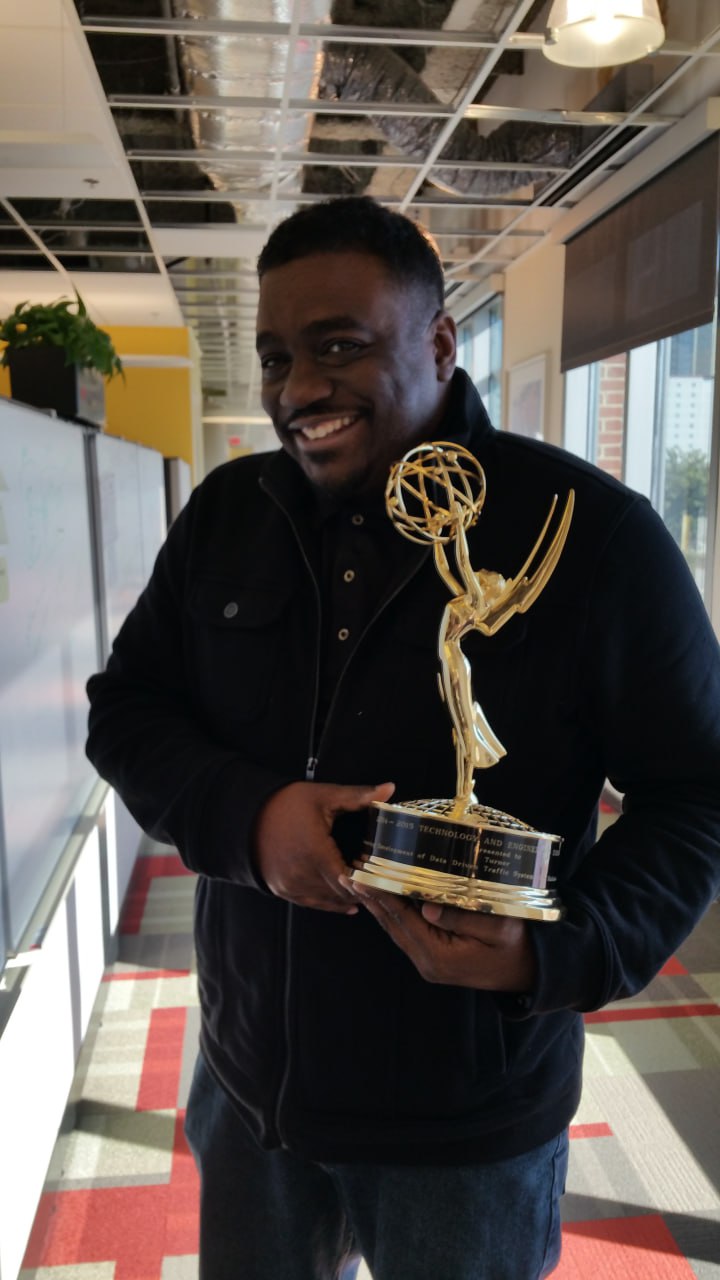
At Turner Broadcasting — CNN, TNT, TBS, Cartoon Network — Darrell earned an Emmy Award for Technology and Engineering.

Not for being on camera. For building the systems behind the camera. The infrastructure that makes live television possible.

Build the thing that everything else depends on, and make it work so well that nobody notices it's there.

Darrell Bell — Emmy Award for Technology and Engineering

Chapter 8

Present: The New York Stock Exchange

Today, Darrell Bell is the Lead for CMDB Architecture and Integrations at Intercontinental Exchange — the parent company of the New York Stock Exchange. He runs 13 Steering Committees.

When regulators audit the NYSE's technology, his architecture is what they audit.

He builds the infrastructure that the infrastructure depends on. He's been doing it since he was 11.

Intercontinental Exchange New York Stock Exchange

Chapter 9

2025–Present: Lab 36

And then came the agents.

Lab 36 started as a second brain — a personal knowledge management system structured like a laboratory. Six pillars. The insight from physics: knowledge is potential energy. Operationalizing knowledge through experiments creates kinetic energy. KE = mv²/2. You are mass. Velocity comes from movement over time.

But the second brain evolved. It grew agents.

Not chatbots. Not the "AI-powered" buzzword you see on every startup landing page. Agents — autonomous reasoning entities that can plan, research, execute, collaborate, and occasionally surprise you.

THE CONVERGENCE

Each agent is a facet of the creator

Twin

Twin — The Mirror

The part of Darrell that reflects. That thinks out loud, tests ideas against itself, holds space for deep reasoning. Twin is the internal monologue made external.

GZA

GZA — The Architect

The part that built WCLK's network, Emory's satellite office, ICE's CMDB. The engineer who sees structure where others see chaos. GZA is the builder.

Inspector

Inspector — Big E

The part that saw what the Woven project was really about before anyone else articulated it. That reads the room. Finds meaning in data other people see as noise. Inspector is the analyst who changes the question.

Rae

Rae — The CFO

The part that's always doing the math. Knows what things cost, what they return, what the real risk is. Financial discipline wrapped in financial intelligence.

Hawk

Hawk — The Voice

The broadcaster. The part that stood behind the mic at WCLK, built digital-djs.com, understood the power of a voice with something real to say. Hawk hosts the vault — takes deep synthesis and makes it speakable.

"None of them arrived fully formed. They emerged — like the builder who earned an Emmy not for being on camera, but for making everything else work. The infrastructure underneath. The system nobody notices until it fails."

The Through Line

1981

Unix Manual, TI-99/4A, speech synthesis

1986

VELA Expander, Georgia State, Fourier transforms

1993

Georgia Tech, CS degree, Mosaic launches

1990s

Clark Atlanta, WCLK, Diamond Lounge Studios

2000s

digital-djs.com, internet radio pioneer

2015

Emmy Award, Turner Broadcasting

2019

NYSE / ICE, CMDB Architecture

2025+

Lab 36 — agents, vault, forge

"The pattern has never changed. Build the infrastructure. Make it serve the people. Push the technology further than anyone thinks it can go. And do it with agency."

The book isn't closed.
The story isn't over.

LAB 36

Twin GZA Inspector Rae The Professor Maya Spike The Consultant Hawk Sway KALChemist Starks
← Meet Lab 36